
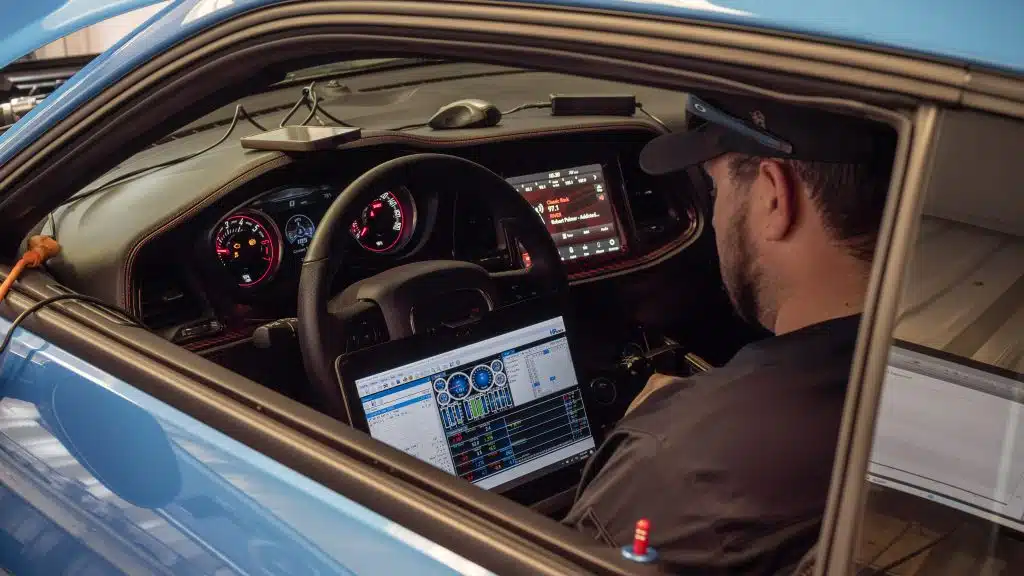
If you’re building a Gen 3 HEMI-powered Dodge vehicle, whether it’s a 5.7L, 6.1L, 6.4L, or supercharged 6.2L Hellcat, there’s one modification that ties every performance upgrade together: tuning.
Whether you’ve installed a camshaft, long tube headers, a cold air intake, or a complete power package, the engine management system must be calibrated to take advantage of those modifications. That’s where the debate begins. So, should you choose remote tuning or dyno tuning?
It’s one of the most common questions we hear, and the answer isn’t always as simple as “one is better than the other.” Both methods involve custom ECU calibration, but they differ in how the tuning process is performed, the data that’s collected, and the types of builds they’re best suited for.
Understanding those differences will help you make the right decision for your vehicle, your goals, and your budget.
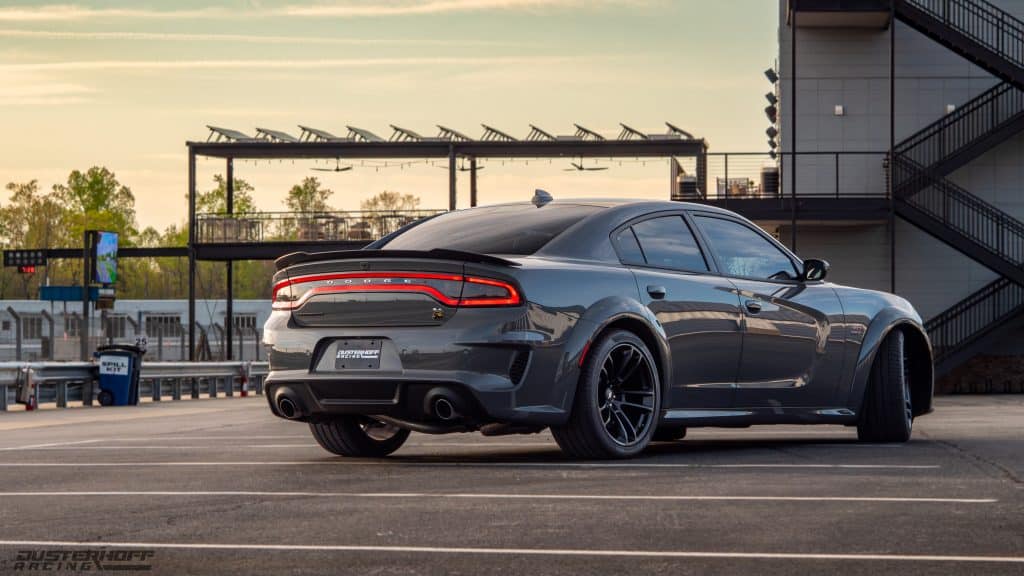
Why Every Modified Gen 3 HEMI Needs Custom Tuning
Modern Dodge vehicles rely on sophisticated engine management systems to control everything from fuel delivery and ignition timing to throttle response, torque management, and transmission behavior.
The factory ECU is calibrated for stock components. As soon as you increase airflow with performance parts, those factory calibrations no longer represent how the engine actually operates. Without proper ECU calibration, the engine may leave horsepower on the table, experience drivability issues, or operate less efficiently than it should.
Custom tuning adjusts those parameters to match your exact combination of modifications, allowing the engine to safely produce the power it’s capable of making.
What Is Remote Tuning?
Remote tuning is a process where your tuner calibrates the vehicle using real-world driving data instead of relying solely on a chassis dyno.
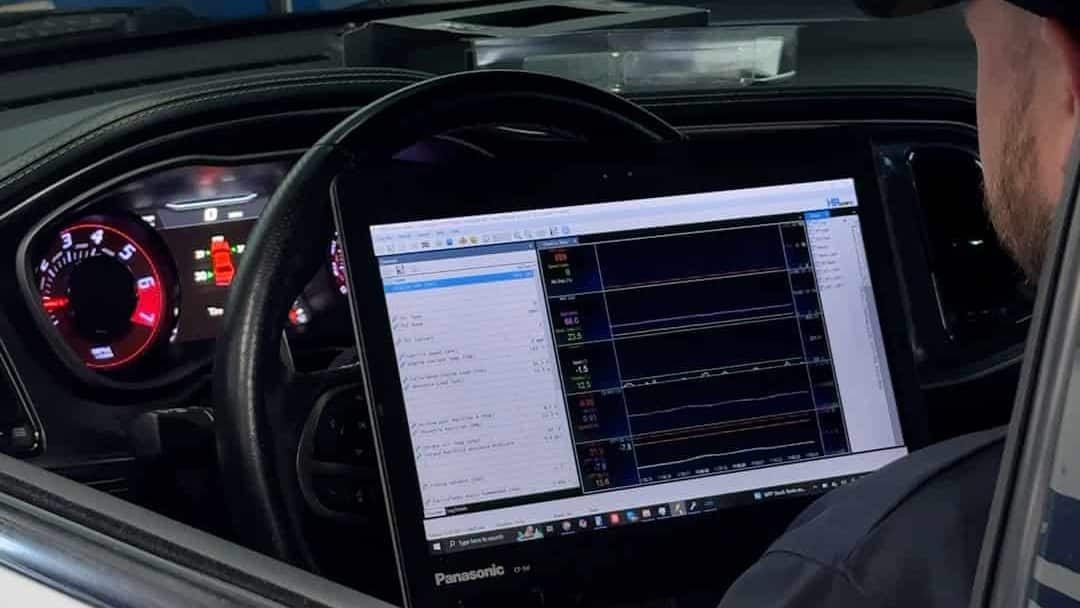
The process begins by loading a base calibration into the ECU. The vehicle is then driven under specific conditions while recording data logs that capture engine parameters such as airflow, fuel trims, ignition timing, knock activity, throttle position, and many other critical values.
Those logs are sent back to the tuner, who analyzes the information and makes revisions to the calibration. Updated files are then loaded into the vehicle, and the process repeats until the tune is fully optimized.
Rather than relying on a single dyno session, remote tuning allows calibration to be refined using the exact fuel, weather conditions, elevation, and driving environment the vehicle experiences every day.
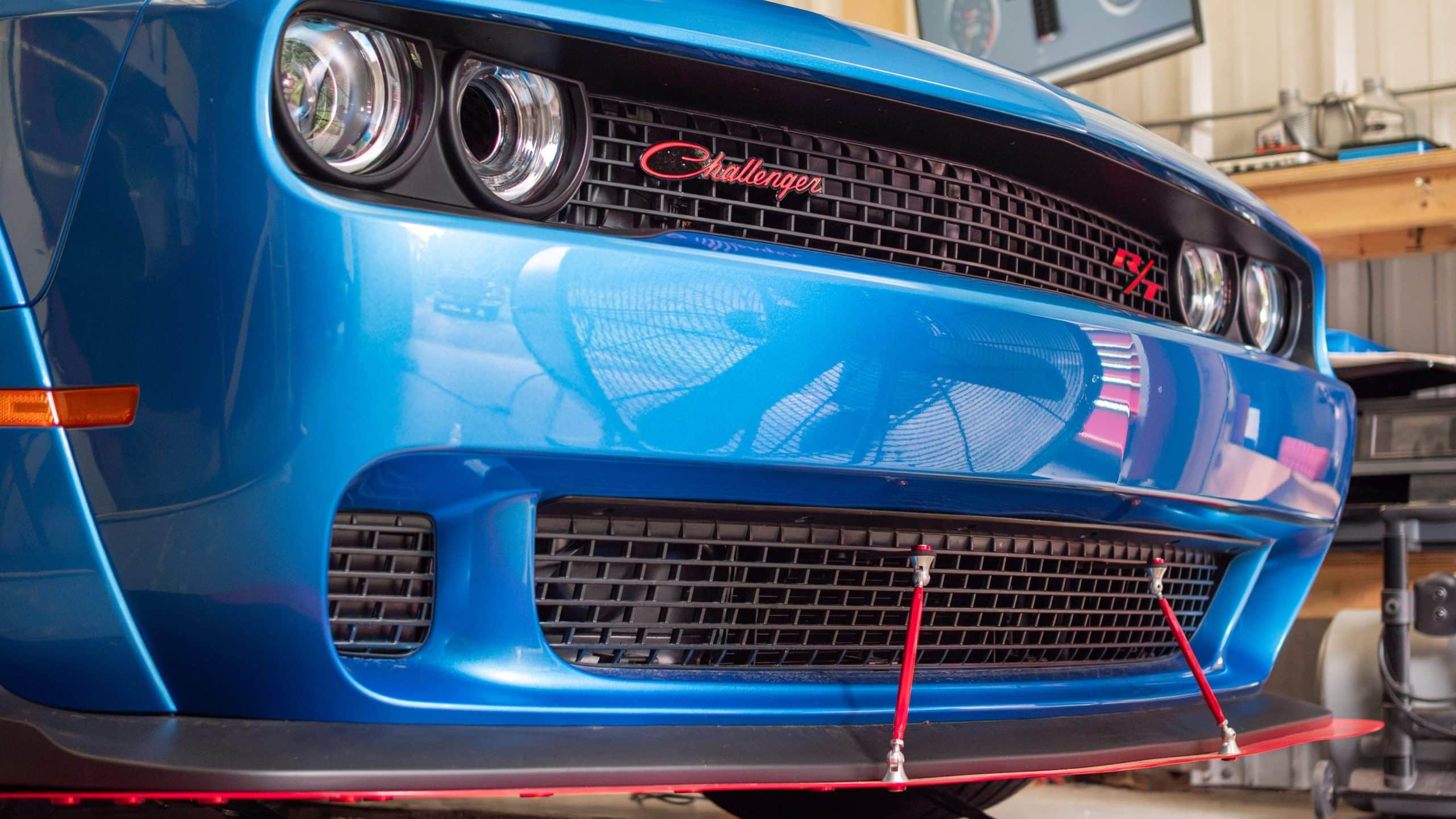
What Is Dyno Tuning?
Dyno tuning uses a chassis dynamometer to simulate driving while measuring horsepower and torque at the wheels. With the vehicle secured to the dyno, the tuner performs controlled pulls through the RPM range while monitoring engine data in real time. Changes to the calibration are made immediately, and additional pulls verify the results.
Because the vehicle remains stationary, the tuner can make rapid adjustments while maintaining consistent testing conditions. Dyno tuning is often used for highly modified combinations, race vehicles, or situations where maximum horsepower optimization is the primary objective.
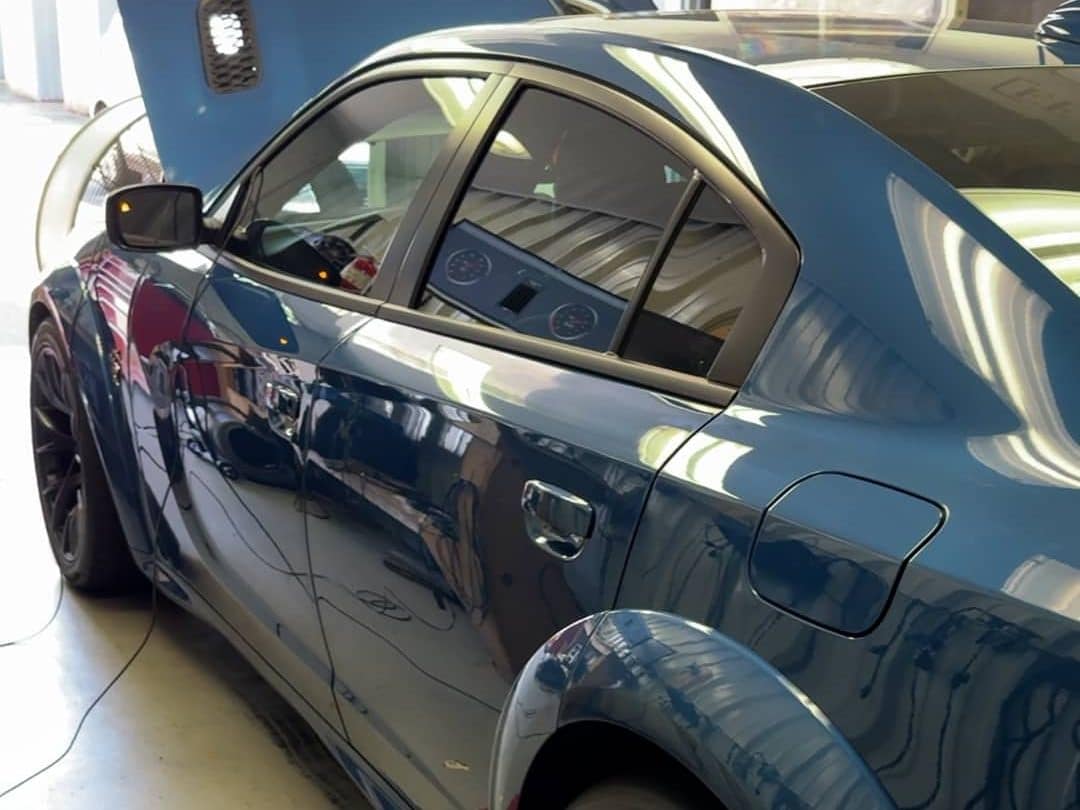
The Biggest Difference Between Remote Tuning and Dyno Tuning
Although both methods involve custom ECU calibration, the environment where the tuning occurs is what separates them.
A chassis dyno provides a controlled testing environment where horsepower gains can be measured consistently. Remote tuning, on the other hand, calibrates the vehicle where it will actually be driven.
For many street-driven Gen 3 HEMI vehicles, this is a significant advantage. The tune can account for real-world variables such as road load, ambient temperatures, fuel quality, altitude, and normal driving behavior.
Instead of optimizing the vehicle for a dyno room, remote tuning optimizes it for the road.
Is One Method More Accurate?
This is probably the biggest misconception surrounding tuning.
Many enthusiasts assume dyno tuning automatically produces a better calibration because horsepower numbers are visible on the screen. While dynos are excellent diagnostic and measurement tools, they don’t necessarily represent how a vehicle behaves in everyday driving.
Modern remote tuning has evolved dramatically over the past decade. With advanced data logging software and experienced tuners, nearly every aspect of engine operation can be monitored and refined remotely.
Which Vehicles Benefit Most From Remote Tuning?
Most Gen 3 HEMI street builds are excellent candidates for remote tuning.
This includes vehicles with:
- Cold air intakes
- Long tube headers
- Cat-back exhaust systems
- Performance camshafts
- Intake manifold upgrades
- Naturally aspirated performance packages
- Many supercharged combinations
As modifications become more specialized or race-focused, dyno tuning may become a better option depending on the specific combination and intended use.
The Importance of an Experienced Tuner
Regardless of which method you choose, the experience of the person writing the calibration matters far more than the location where the tuning takes place. An experienced HEMI tuner understands airflow characteristics, fuel requirements, ignition timing strategies, transmission behavior, and the unique needs of each Gen 3 platform.
A great tuner doesn’t simply chase the highest horsepower number. They build a calibration that delivers reliable performance, smooth drivability, and long-term engine safety. That’s what separates an average tune from a truly exceptional one.
Ready to Unlock the Full Potential of Your HEMI?
Whether you choose remote tuning or dyno tuning, the objective remains the same: creating a custom ECU calibration that allows your Gen 3 HEMI to perform at its full potential.
At Dusterhoff Racing, we specialize in remote tuning for Gen 3 HEMI-powered Dodge vehicles. Whether you’ve installed a camshaft kit, longtube headers, cold air intake, or one of our Gen 3 HEMI power packages, we can develop a custom ECU calibration tailored to your exact combination.
Our remote tuning process is designed to deliver safe, reliable, real-world performance without requiring you to travel to a dyno facility, helping you get the most from your build wherever you are.
Want to check out more newsletters or blogs?