
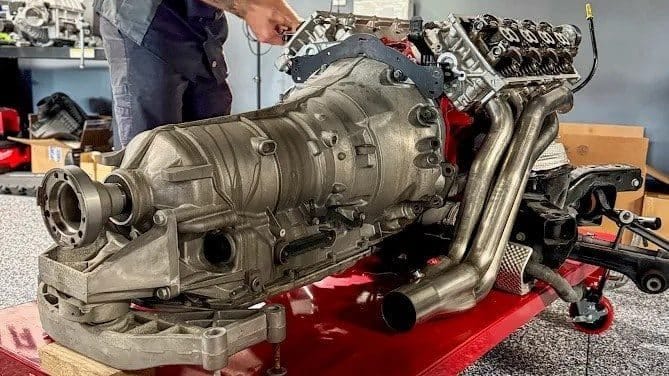
When you start shopping for a camshaft for your Gen 3 HEMI (5.7L, 6.1L, 6.4L, or 6.2L), you’re immediately hit with a wall of numbers or stages. Lift, Duration, LSA, Intake vs exhaust. It can feel overwhelming fast. But those numbers aren’t random; they define exactly how your engine will behave.
This guide breaks down camshaft lift, duration, and LSA, and more importantly, how those specs apply to real-world Gen 3 HEMI performance. (You can take what you learn here about camshaft specs and apply it to other platforms as well.)
“Stage” Cam vs. “Off-the-Shelf” Cams
Terms like Stage 1, Stage 2, and Stage 3 are useful for general comparisons, but they don’t tell the full story. Two cams labeled the same “stage” from different companies can behave completely differently depending on their actual specifications. Camshaft specs determine airflow, and airflow determines power.
Most companies carry a mass-produced, generic spec’d cam, often referred to as an “off-the-shelf cam,” and often share their cam specs. Custom grind cams are often closely engineered, and the specs are for a specific motor or setup. Often, shops that have their own custom spec cams do not share all or any of the cam spec information, which is fine because that’s what makes their cam custom and unique. So let’s learn what some of these terms mean.
Camshaft Lift: How Much Air Can Enter the Engine
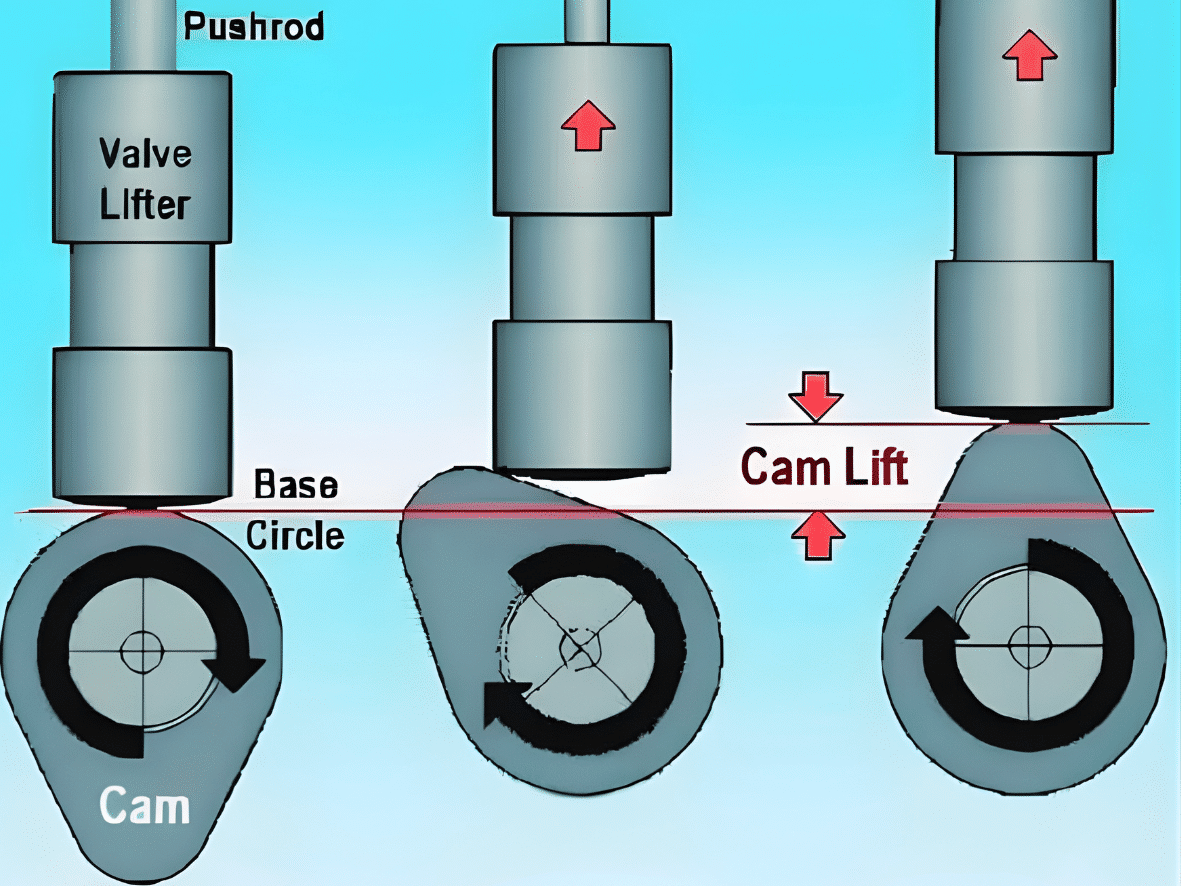
Lift is the distance the valve opens. The higher the lift, the more air and fuel can enter the combustion chamber, and the more exhaust can exit.
Increased lift allows the cylinder heads to flow more efficiently, especially when paired with upgraded valve springs and proper tuning. This is one of the fastest ways to improve airflow without changing the cylinder heads themselves.
However, lift isn’t just about going bigger. The valve train must be able to handle it. Higher lift generally improves peak airflow and horsepower potential, but it needs to be balanced with the rest of the combination.
Camshaft Duration: How Long the Valves Stay Open
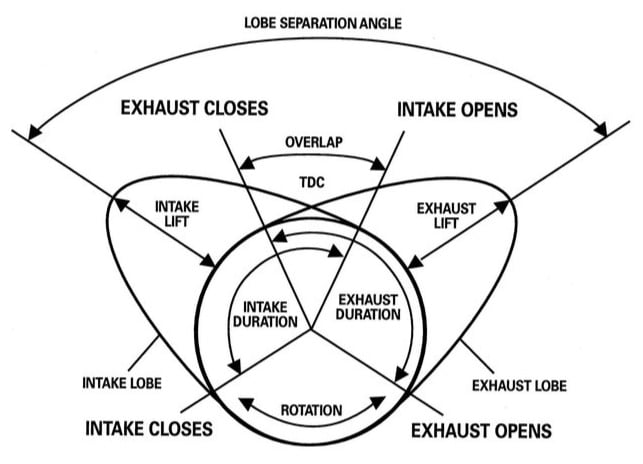
Duration measures how long the valve remains open during each cycle, typically measured in degrees of crankshaft rotation. This is where you really start to shape the engine’s personality.
Shorter duration cams keep airflow efficient at lower RPM, which improves throttle response and drivability. This is ideal for daily-driven builds that spend most of their time in the lower RPM range.
Longer-duration cams keep the valves open longer, which allows more air to move at higher RPM. This shifts the powerband upward, making more power at higher engine speeds, but often at the cost of low-end torque and smooth idle.
On a 6.2L supercharged HEMI, duration must be carefully selected. Too much duration can affect how efficiently the engine holds boost, especially if overlap becomes excessive. Duration is one of the most important specs when it comes to balancing drivability and performance.
Lobe Separation Angle (LSA): Where Everything Comes Together
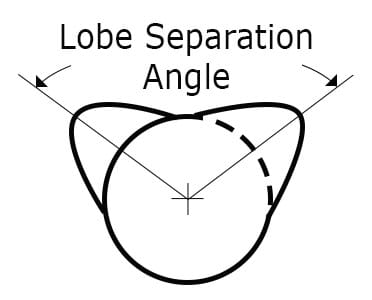
Lobe Separation Angle, or LSA, refers to the angle between the intake and exhaust cam lobes. This spec has a major impact on idle quality, engine vacuum, and how the powerband feels.
A tighter LSA (smaller number) increases valve overlap. This creates the aggressive, lopey idle that many enthusiasts want, and it can improve mid-range and high-RPM performance. However, it can also reduce idle stability and vacuum, especially in street-driven vehicles.
A wider LSA (a larger number) reduces overlap. This results in a smoother idle, better vacuum, and more stable drivability. It’s often preferred for daily drivers and boosted applications like the 6.2L Hellcat platform, where maintaining boost efficiency is critical.
How These Specs Work Together
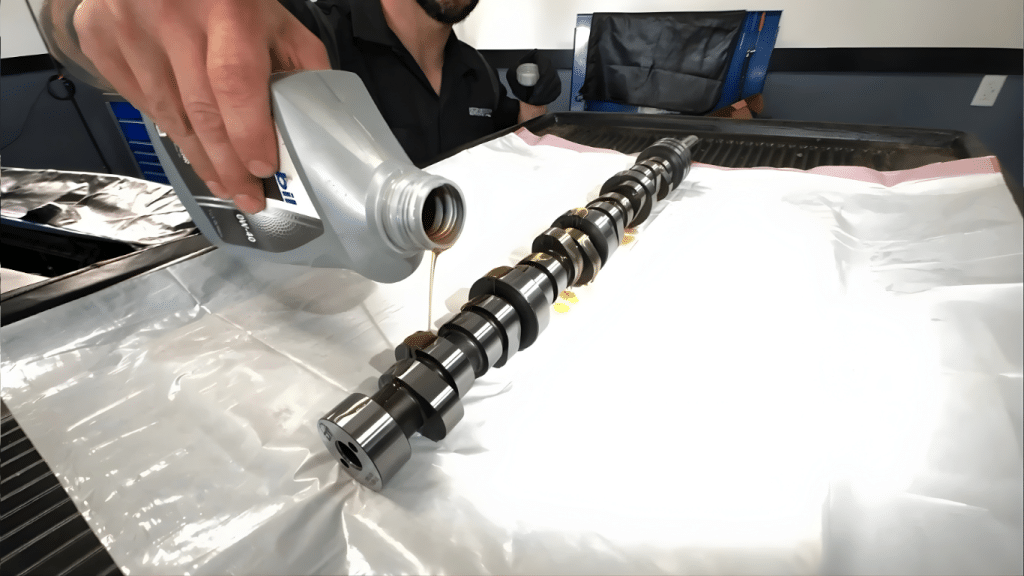
Lift, duration, and LSA don’t operate independently. They work together as a system, and changing one affects how the others behave.
A camshaft with high lift but short duration will behave very differently from one with moderate lift and long duration. Similarly, two cams with identical lift and duration can feel completely different depending on their LSA.
This is why simply comparing numbers without understanding their relationship can lead to poor decisions. The goal isn’t to maximize one spec, it’s to balance all three for your specific application.
Choosing a Camshaft for Your Build
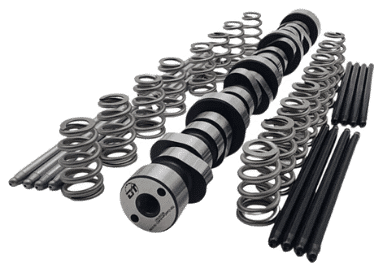
When it comes to choosing a camshaft, the right answer always depends on how the vehicle is used and what supporting modifications are in place.
Before making a decision, you should consider:
- Engine platform (5.7L, 6.1L, 6.4L, or 6.2L)
- Naturally aspirated or supercharged setup
- Transmission type and gearing
- Supporting modifications (headers, intake, fuel system)
- Intended use (daily driving, street performance, drag, or track)
Matching the camshaft to the full combination is what delivers results.
Want to learn more about how to choose the right cam for your hemi? Check out this blog: How to Choose the Right Camshaft for Your Build!
The Difference Between Guessing and Getting It Right
Reading specs is one thing. Applying them correctly to a real-world build is another.
Most issues people run into with camshaft upgrades, poor drivability, lack of power where expected, or mismatched setups, come from choosing a cam based on isolated specs instead of a complete system. That’s where experience matters.
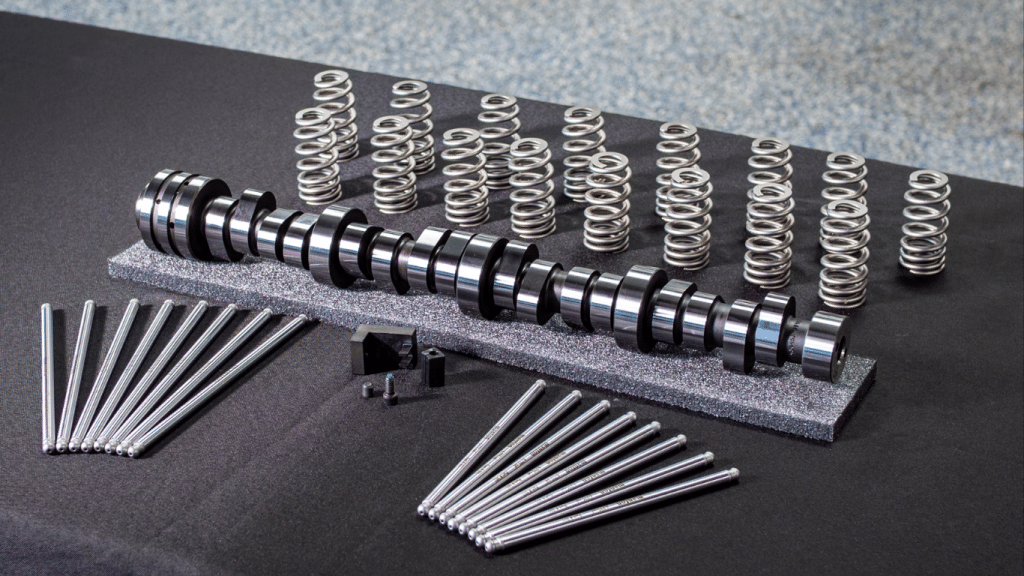
Here at Dusterhoff Racing, we take the guesswork and hard work out of trying to figure out what your setup actually needs. Our cam kits are designed around real Gen 3 HEMI combinations, taking into account airflow, fuel type, intended use, and supporting components.
Instead of trying to decode spec sheets and hope for the best, you get a setup that’s built to work together from the start.
Contact Dusterhoff Racing at 404 – 480 – 4754 to discuss your build! Already know what you want? Check out our cams here: Dusterhoff Racing Custom Grind Camshafts
Curious what our camshafts sound like? Hear the Difference: Exhaust & Cam Chop Sound Clips