
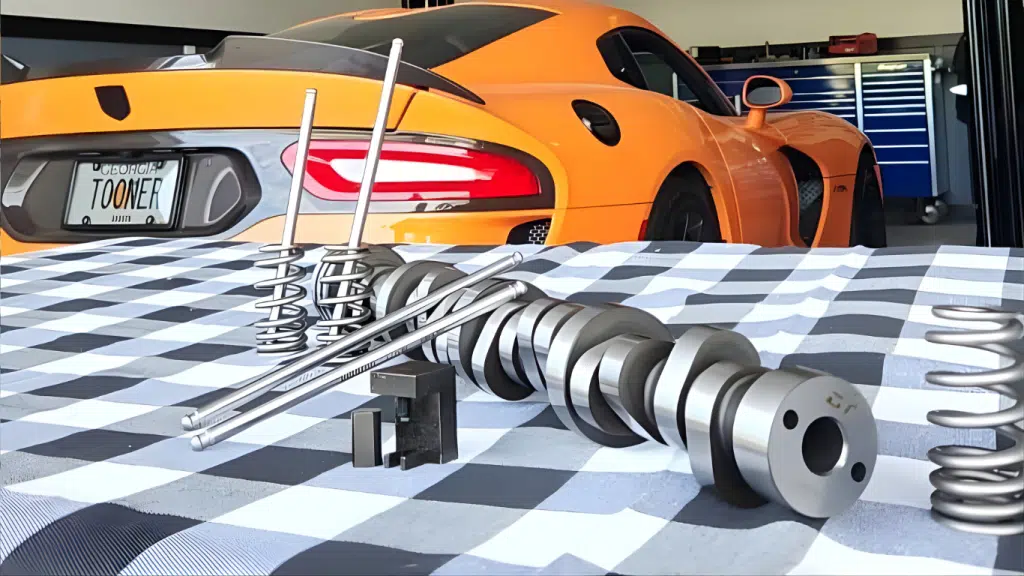
If you spend any time around modified Gen 3 HEMI engines, 5.7L, 6.1L, 6.4L, or the supercharged 6.2L, you’ll quickly notice that a camshaft upgrade is one of the most common modifications enthusiasts talk about. There’s a good reason for that. Few parts can change how an engine behaves as dramatically as the camshaft.
From horsepower gains to an aggressive, choppy idle, a properly chosen camshaft can completely transform the personality of a HEMI-powered vehicle. But the real aftermarket camshaft benefits go deeper than sound or peak horsepower numbers. The camshaft plays a central role in how efficiently the engine breathes, how power is delivered across the RPM range, and how well the entire system works together.
Understanding what changes when you install a performance camshaft upgrade can help you decide if it’s the right move for your build.
Why the Factory Camshaft Is Designed the Way It Is
The camshafts installed in factory Gen 3 HEMI engines are engineered to satisfy a wide range of requirements. Automakers must balance emissions standards, fuel economy, smooth idle quality, long-term durability, and mass-production reliability. As a result, factory cam profiles are intentionally conservative.
For the average driver, that balance works well. The engine starts easily, idles smoothly, and delivers predictable performance in traffic or during long highway drives. However, those compromises also limit the amount of air the engine can move through the cylinder heads at higher RPM.
Performance enthusiasts quickly discover that the factory camshaft leaves room for improvement. When airflow is prioritized over emissions and comfort, a different cam profile can unlock significantly more performance from the same engine.
Airflow Is the Foundation of Power
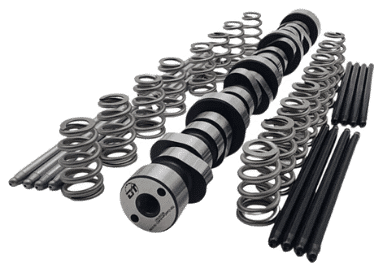
An internal combustion engine is essentially an air pump. The more efficiently it can move air into and out of the cylinders, the more power it can produce. The camshaft controls the timing and movement of the intake and exhaust valves, which means it directly influences airflow.
A performance camshaft changes how long the valves stay open and how far they open during each cycle. Increasing lift allows more air and fuel to enter the cylinder, while increased duration keeps the valves open longer to maximize airflow at higher engine speeds. Valve overlap is the brief moment when both intake and exhaust valves are open, which also plays a role in scavenging exhaust gases and improving cylinder filling.
How a Camshaft Changes the Powerband
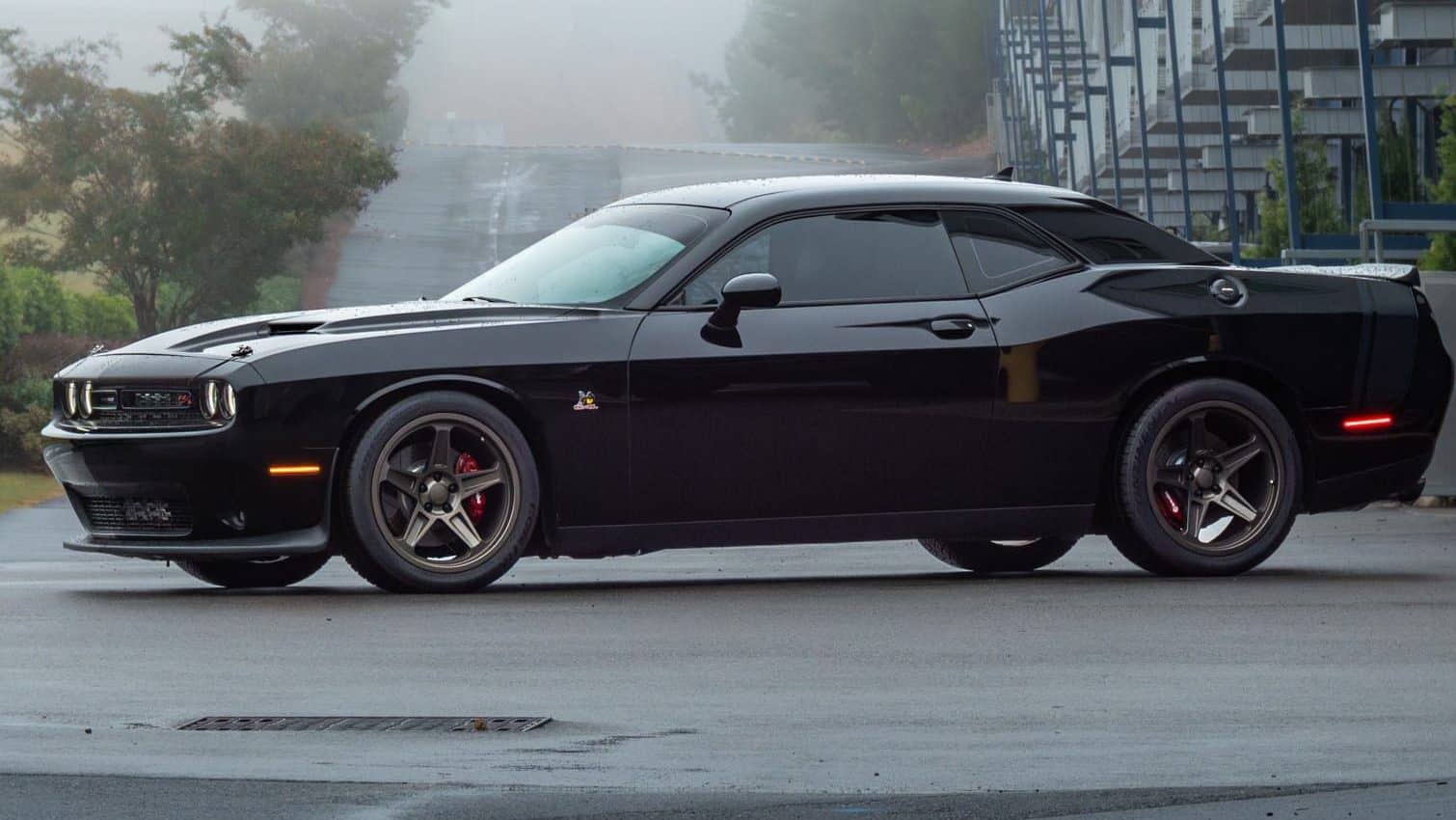
One of the biggest effects of a performance camshaft upgrade is how it shifts the engine’s powerband. A stock camshaft is designed to produce smooth torque at lower RPM, which helps drivability in everyday situations. When an aftermarket camshaft is installed, the power curve often moves higher in the RPM range.
This shift allows the engine to continue making power where the factory cam would normally begin to taper off. On a modified Gen 3 HEMI, this can mean stronger acceleration through the upper RPM range and improved performance during wide-open throttle situations.
The exact behavior depends on the cam profile. Some camshafts are designed to maintain strong mid-range torque for street use, while others are optimized for high-RPM horsepower in racing environments. The right choice depends on how the vehicle is used and what supporting modifications are already in place.
Camshaft Horsepower Gains on Gen 3 HEMI Engines
When enthusiasts research camshaft horsepower gains, they often want a simple number. The reality is that gains vary depending on the engine platform and supporting components. On a naturally aspirated Gen 3 HEMI with proper tuning and supporting upgrades, a camshaft can provide significant improvements in both horsepower and torque.
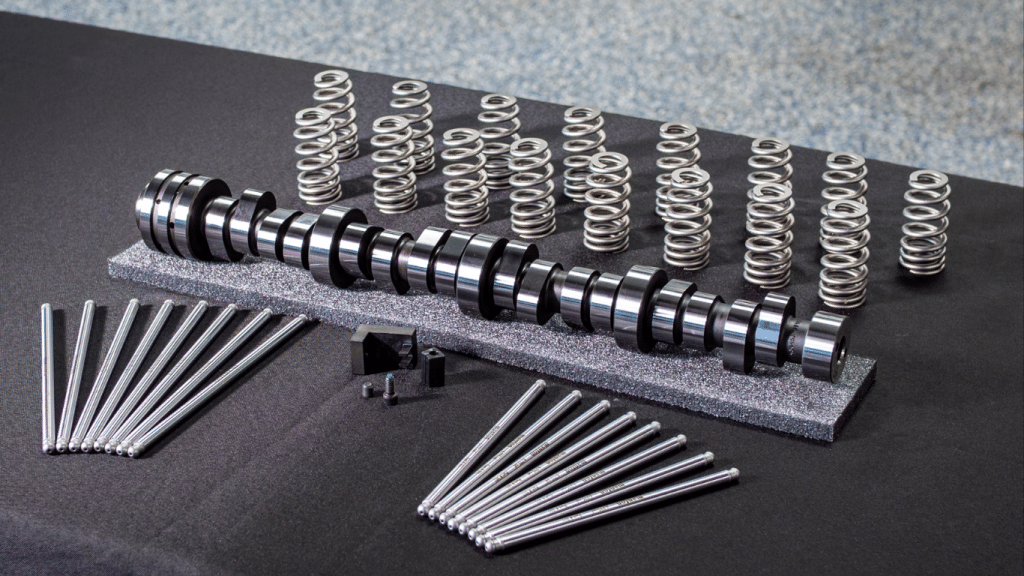
Typical supporting modifications that help maximize camshaft performance include:
- Long tube headers and your favorite catback exhaust
- Upgraded valve springs designed for the cam profile
- Proper ECU tuning to adjust fuel and ignition timing
- Intake airflow improvements example (JLT or Legmaker Intake)
- Correct torque converter selection for automatic vehicles
While the aftermarket camshaft benefits can be substantial, it’s important to understand the tradeoffs involved. As cam profiles become more aggressive, idle quality often becomes rougher due to increased valve overlap. This lopey idle sound is popular among enthusiasts, but it can also affect low-speed drivability.
More aggressive cams may also reduce vacuum levels at idle, which can affect accessories like power brakes. Automatic-transmission vehicles sometimes benefit from a higher stall torque converter to keep the engine within its optimal power range.
These changes aren’t necessarily negative, but they should be expected when upgrading to a performance-oriented camshaft. The goal is to match the cam profile with the vehicle’s intended use rather than choosing purely based on sound or peak horsepower numbers.
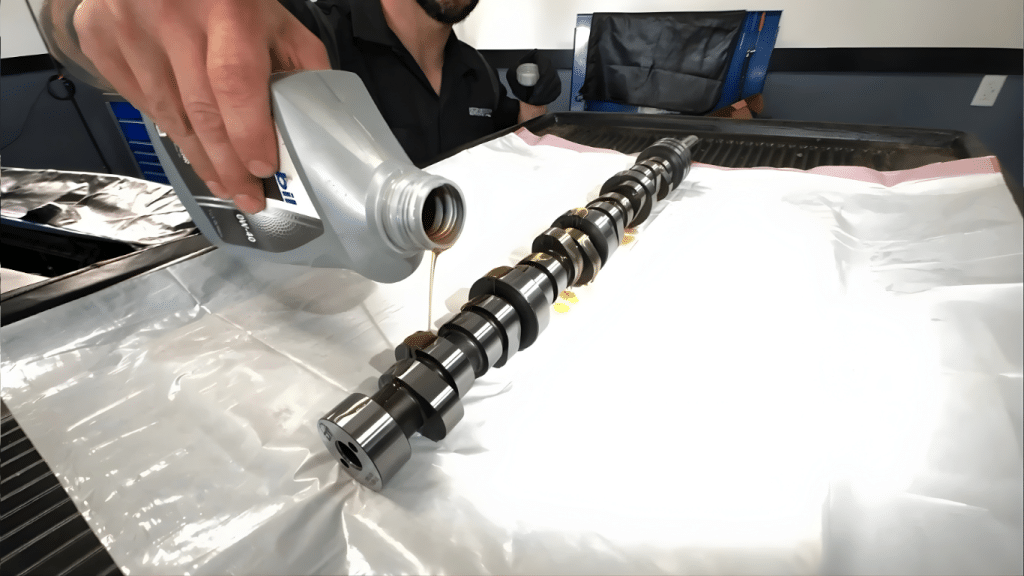
Why Camshafts Are a Foundation Upgrade
A camshaft upgrade does more than simply increase peak horsepower. It changes how the entire engine operates. When airflow improves, other modifications such as cylinder head upgrades, intake improvements, and exhaust systems can work more effectively.
For many Gen 3 HEMI performance builds, the camshaft becomes the foundation around which the rest of the engine combination is designed. A properly matched camshaft allows the engine to take full advantage of improved airflow and fueling while maintaining reliability.
Because of this, cam selection should always consider the long-term direction of the build rather than only the current configuration.
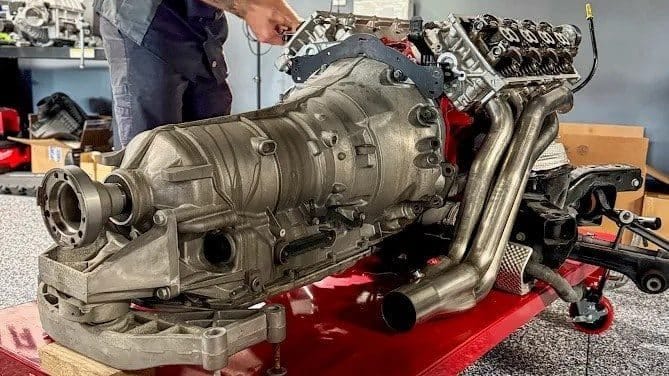
Choosing the Right Camshaft for Your Gen 3 HEMI
Whether you’re working with a 5.7L, 6.1L, 6.4L, or a supercharged 6.2L platform, the ideal camshaft depends on how the vehicle will actually be used.
So let’s say you want the nice choppy idle for your Gen 3 Hemi and you don’t care as much about power gains as you do sound and drivability. If this sounds like you, you should definitely consider our Stage 1 Chop Whisperer cam kit that is available for 5.7L, 6.1L, 6.2L, and 6.4L. It is a stock converter friendly for those of you with an automatic transmission, and it sounds great and still has amazing drivability.
If you prioritize power and a choppy idle, and less emphasis on drivability, consider our Stage 2 Chop Shaker cam kit or our Stage 3 Idle Apocalypse cam kit.
Need Help Choosing the Right Cam?
If you’re unsure which stage cam is best for your build, our team can help you make the right decision. By looking at your vehicle, current modifications, fuel choice, and goals, we can recommend a camshaft that delivers the performance you want without sacrificing reliability or drivability.
Contact Dusterhoff Racing at 404 – 480 – 4754 to discuss your build! Already know what you want? Check out our cams here: Dusterhoff Racing Custom Grind Camshafts
Want to learn more about how to choose the right cam for your hemi? Check out this blog: How to Choose the Right Camshaft for Your Build!
Curious what our camshafts sound like? Hear the Difference: Exhaust & Cam Chop Sound Clips