
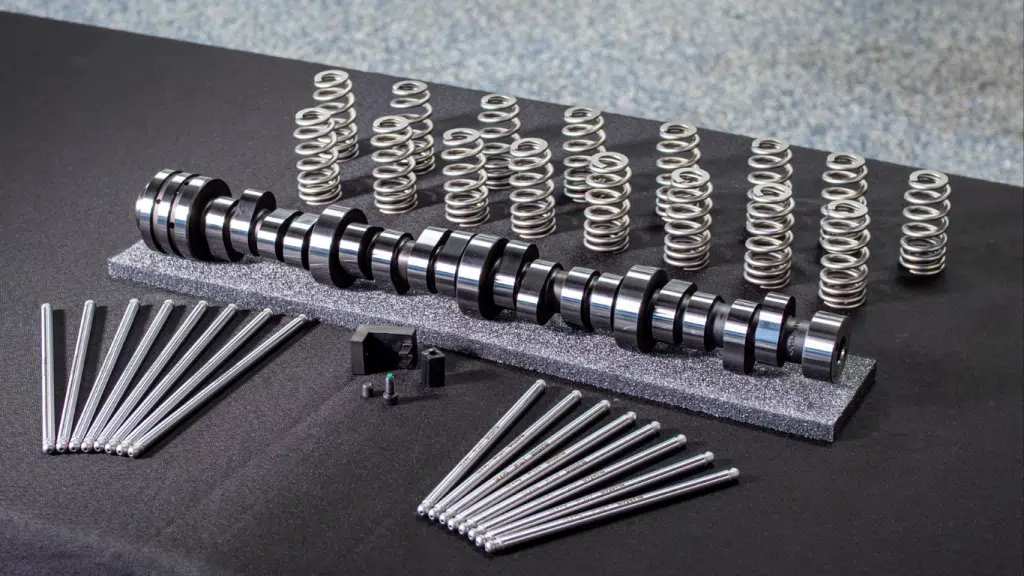
If you’ve been around performance enthusiasts or professionals for more than five minutes, you’ve likely heard people talk about camshafts. Big cam. Small cam. Stage this. Stage that. If you would like to learn more about cam stages, please visit our “How to choose the right camshaft for your build” blog. But before you pick one based on how nasty it sounds at idle, let’s answer the real question:
What is a camshaft, and what does it actually do?
The Simple Explanation
A camshaft is the part of your engine that controls when the intake and exhaust valves open and close. That’s it. That’s the magic.
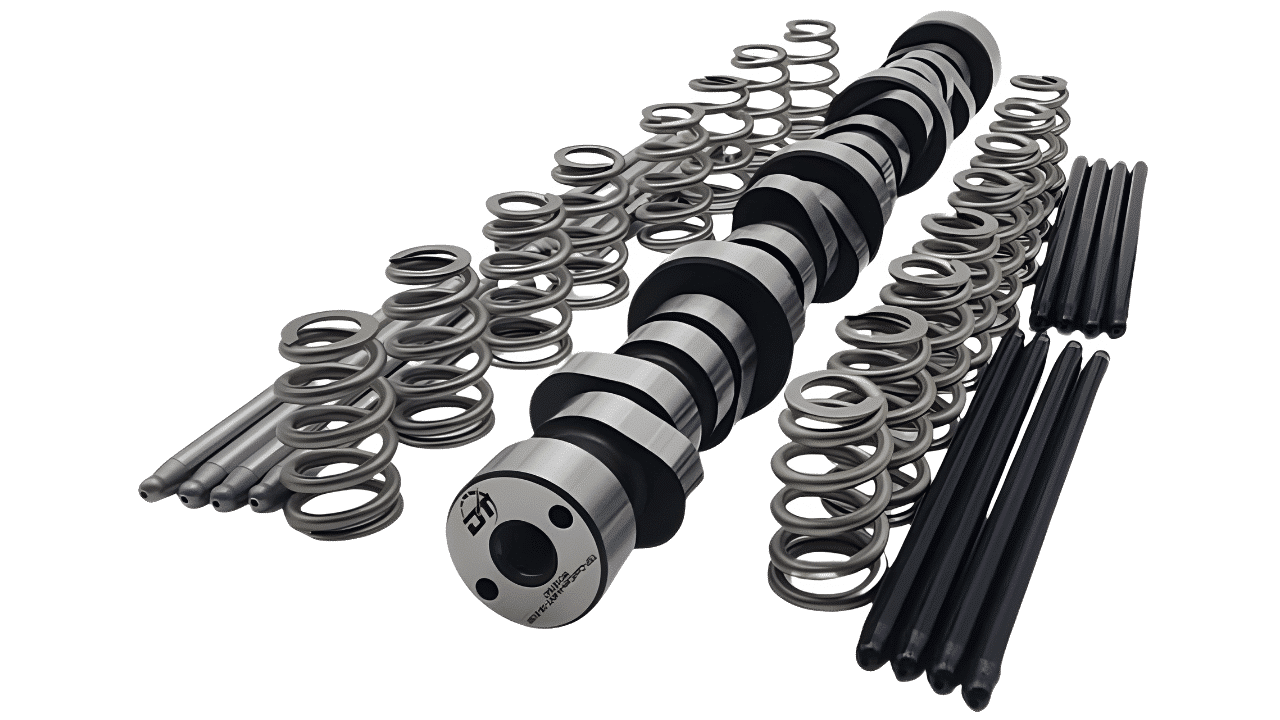
Inside your engine, air and fuel need to come in, get compressed, explode, and exit as exhaust. The camshaft controls the timing and movement of the valves that make this happen. It uses precisely shaped lobes (the “cams”) to push the valves open as it rotates. The shape of those lobes determines how long the valves stay open and how far they open.
And those two things, duration and lift, have a massive impact on how your engine behaves.
Why the Camshaft Matters So Much
If the crankshaft is the muscle of your engine, the camshaft is the brain.
Change the camshaft, and you change:
- Idle quality and sound
- Powerband location
- Throttle response
- Peak horsepower
- Overall drivability
A mild camshaft keeps things smooth and responsive down low. A more aggressive cam keeps the valves open longer and higher, allowing more airflow at higher RPM. More airflow means more potential power, but it also means tradeoffs.
That famous “choppy” idle? That’s valve overlap doing its thing. Sounds cool. Sometimes it can make traffic a little less fun.
How a Camshaft Changes Power
An engine is basically an air pump. The more efficiently it moves air, the more power it can make.
A stock camshaft is designed for smooth idle, emissions, fuel economy, and reliability across millions of miles. A performance camshaft shifts the focus toward airflow and power.
- More lift = valves open farther = more air in and out
- More duration = valves stay open longer
- More overlap = intake and exhaust valves open at the same time
The result? Power increases as RPM rises. Idle gets rougher. Supporting mods becomes more important. Tuning becomes mandatory.
Supporting Mods Matter
A camshaft doesn’t live alone. It works as part of a system.
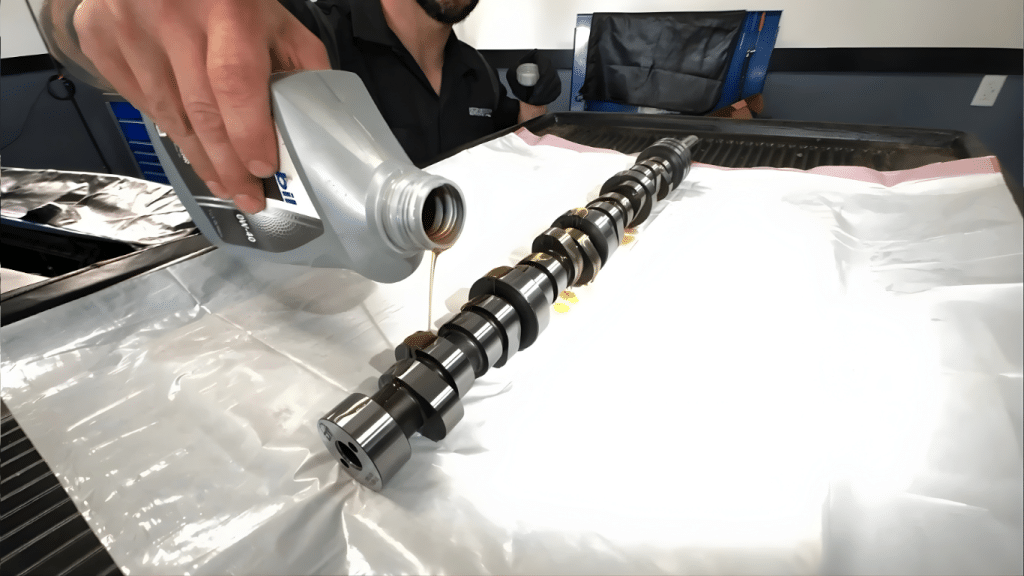
If you increase airflow with a cam, you’ll often need proper valve springs, pushrods, intake upgrades, depending on the cam, sometimes a higher stall converter (for automatics), and a professional tune is a must.
We always recommend longtube headers paired with your personal favorite catback exhaust. Throwing a big cam into an otherwise stock setup usually leads to disappointment. The engine needs to breathe everywhere, not just at the cam.
Street vs Track: Big Difference
For a daily-driven car, balance is everything. You want torque where you use it. You want drivability. You want it to behave in traffic and still rip when you punch it.
For a track-focused build? That’s where aggressive cam profiles shine. High RPM power. Less concern about idle manners. Maximum airflow.
Neither is “better.” It all depends on the goal.
The Sound vs The Science
Let’s be honest, most people fall in love with the sound first.
We get it. A lopey idle turns heads. But the right camshaft isn’t the one that sounds the wildest. It’s the one that matches your compression ratio, fuel type, gearing, converter (if automatic), cylinder head flow, and intended use.
Need Help Picking the Right Cam?
If you’re building a HEMI and aren’t sure what camshaft fits your goals, give us a call at (404) 480-4754. We’ll look at your current setup and recommend something that actually works.
Already know what you want? Checkout our cams here: Dusterhoff Racing Custom Grind Camshafts